A recent study by the Faculty of Sciences of the National University of Buenos Aires presented a list of the 10 most prominent cities in Argentina in 2025. The report, which can be consulted online, is based on a detailed analysis of data (both proprietary and public) that the researchers used for this purpose.
INFORMACIÓN GENERAL
Recent study
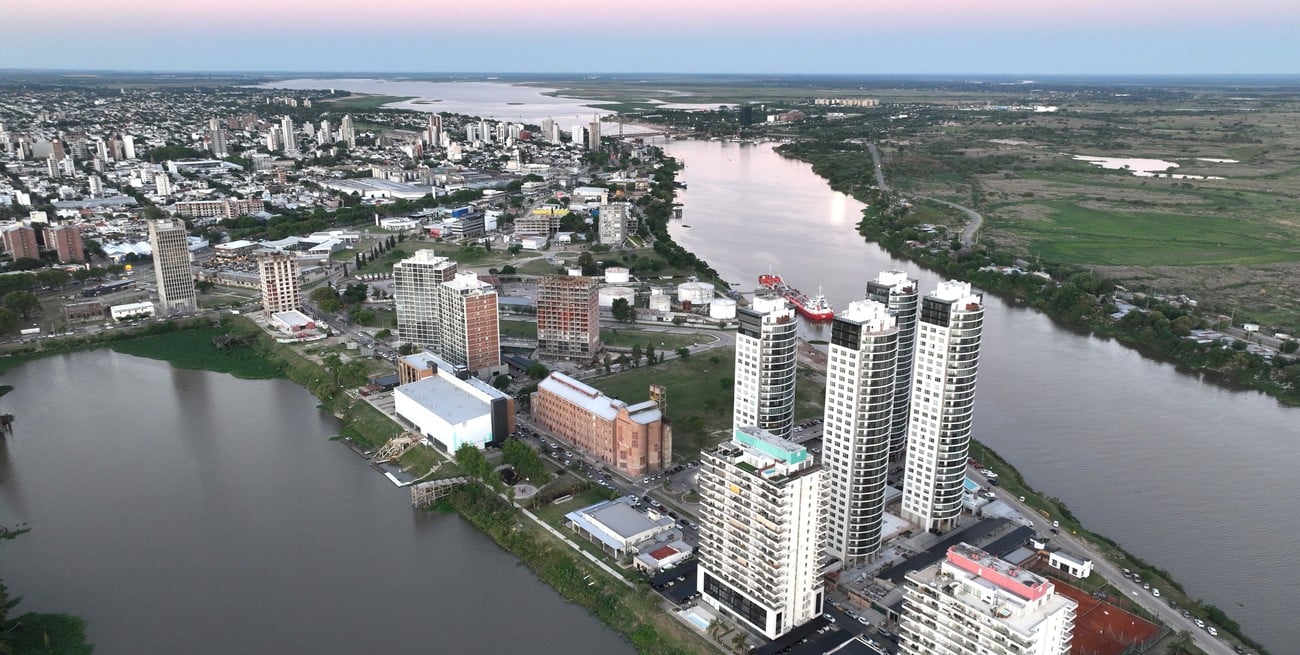
A University of Buenos Aires (UBA) study placed two cities from Santa Fe among the country’s top 10: why
A report from the Faculty of Economic Sciences of the UBA ranked the country’s main urban centers using both proprietary and public data. The Strategic City Management Index is used to prepare the study. The City of Buenos Aires leads.
12:51
In that regard, the UBA specialists devised a Strategic City Management Index that is composed of five dimensions: “politics and institutions, economic development, society, environment and technology and infrastructure.” Each dimension is broken down into a set of 31 variables representative of the main priority areas, they explain.
As they clarify in the text, they applied the IGEC “globally to the cities of Buenos Aires, Córdoba, Rosario, Santa Fe, Mendoza, San Miguel de Tucumán, Salta, San Juan, Resistencia and Mar del Plata.”
The first point of analysis in the study is the political and institutional dimension of each city analyzed. “The role of variables such as citizen participation and the government’s capacity to implement digital innovation strategies that contribute to administrative efficiency is highlighted,” the report details.
Accordingly, the following variables were considered: Institutional strengthening, Citizen participation, Urban planning, Governance and transparency, Management innovations and Strategic alliances.
In this analyzed dimension, the City of Buenos Aires ranks first, followed by Mendoza, with San Miguel de Tucumán completing the podium. Rosario appears fifth and the city of Santa Fe seventh.
The second dimension aims to analyze the economic development of the cities under scrutiny. The variables considered were: Economic solvency, Management efficiency, Structural competitiveness, Investment attraction, Establishment of cutting‑edge industries, Entrepreneurial ecosystems and International projection.
In this area, the City of Buenos Aires again leads and Rosario is in second position. San Juan is one step below and the city of Santa Fe is fourth, ahead of Córdoba in fifth.
The third dimension concerns social aspects. “Social development, Education, Culture, Urban identity, Health, Security, Employment, Public space” are the variables chosen by the researchers. Here, the City of Buenos Aires appears again as leader, followed by Córdoba, with Mendoza closing the podium. Rosario and Santa Fe ranked fourth and fifth, respectively.
The “Environmental” dimension is the fourth point. In this realm, the following variables came into play: City sustainability, Mobility and transport, Green spaces, Energy efficiency, Ecological culture, and Waste management. Here the City of Buenos Aires appears first, followed by Mendoza, with San Miguel de Tucumán completing the top three. Rosario and Santa Fe appear fifth and sixth, respectively, behind Córdoba.
The fourth dimension relates to technology and infrastructure. “Public service infrastructure, Available management technologies, Availability and citizen access to technology, Applied technological innovations” are the variables studied by the UBA experts.
Concretely, the City of Buenos Aires remains first on the list, San Miguel de Tucumán appears second and Córdoba closes the top three. Rosario ranks sixth and Santa Fe falls to ninth place.
The last dimension analyzed by the UBA specialists was Global Strategic Development. In this section, the City of Buenos Aires also heads the ranking and is followed by Mendoza and Córdoba. Rosario appears fifth and the city of Santa Fe seventh.
In summary, the study places each city depending on the results obtained across all dimensions. Thus the global ranking was determined as follows:
In the continuation of the report, the specialists devoted a section to comparing data with 2024.
And they conclude: “The overall valuation of the ten cities studied saw a slight increase of 0.06 points. The Autonomous City of Buenos Aires maintains the highest overall valuation and in each of the dimensions of analysis that it had already obtained in 2024. The capital’s global figures show a stable situation, with values similar to those reached in 2024.”
In this regard, they add: “Mendoza, Córdoba and Rosario also maintain their valuations from the previous year, showing slight increases in their scores.” Regarding the city of Santa Fe they note: “(Together with San Juan) they emerge with slight decreases in their values, although these do not represent significant levels.”
Focusing on the capital of the province of Santa Fe, it should be noted that its overall score improved compared to 2024. That year the same study scored the city founded by Juan de Garay at 2.98, while in 2025 that value rose to 3.17.
#TEMAS:
TENES QUE SABER

La PDI esclareció una seguidilla de 17 robos a comercios de Reconquista y Avellaneda: 7 jóvenes detenidos

La AFA quiere la Finalissima en el Monumental y España busca el Santiago Bernabéu

Ansiedad: los hábitos cotidianos que pueden empeorarla sin que las personas lo noten

Claudio "Chiqui" Tapia declaró ante la Justicia en la causa AFA

Gutiérrez: “La Justicia de Santa Fe se maneja con austeridad y eficiencia”




Política
Unanimidad La Legislatura suspendió sin plazos al fiscal adjunto Leandro Darío Benegas

Habló ante la prensa Claudio "Chiqui" Tapia declaró ante la Justicia en la causa AFA

El presidente de la Corte abrió el año judicial Gutiérrez: “La Justicia de Santa Fe se maneja con austeridad y eficiencia”

Este jueves Michlig, Scaglia y Blanco hablaron en la previa de la apertura judicial de Santa Fe

Corte Suprema Falistocco pidió "compromiso y honestidad" en el inicio del año judicial de Santa Fe
Área Metropolitana
Ordenanza La Municipalidad de Santa Fe eximirá del 50% del DReI a comercios de la Av. J. J. Paso
Santa Fe Violeta Quiroz propone que los vecinos puedan “multar al Estado” cuando el municipio no cumpla con los servicios públicos
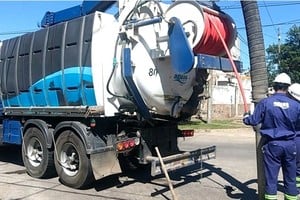
Santa Fe ciudad Socavón en barrio Sur: Aguas Santafesinas investiga la causa
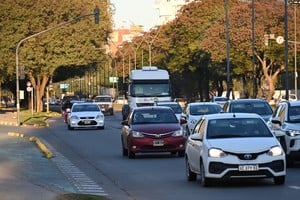
Jueves 12 de marzo de 2026 El tránsito en la provincia de Santa Fe; la información minuto a minuto

Nuevo isologo El municipio de Santa Fe decidió cambiar de "cara gráfica" e institucional: cuáles fueron los motivos
Sucesos

Incumplimientos reiterados La Justicia prohibió el uso de redes sociales a una mujer por difamar a un médico santafesino
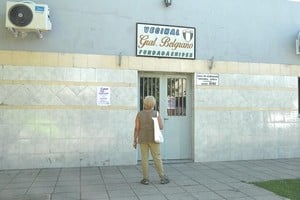
Inseguridad en Santa Fe Robos e intentos de entraderas generan preocupación en barrio Belgrano
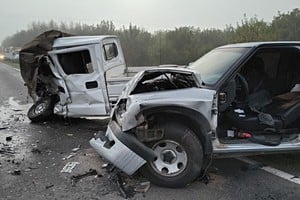
Tragedia en el sur santafesino Dos muertos y cuatro heridos tras un choque frontal en la ruta 14

Juicio por la muerte del Diez Caso Maradona: Fernando Burlando pedirá penas de hasta 25 años para los acusados

Se investiga Recreo: un automóvil ardió por completo sobre la Ruta 11
Información General

Periodismo e innovación Cómo la inteligencia artificial devolvió el vuelo al hidroavión “Río Paraná”, 84 años después

3 avisos que cuentan la Santa Fe de los años 20 y 30 Las publicidades que leían nuestros abuelos
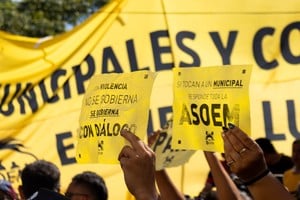
Conflicto ASOEM denuncia prácticas antisindicales y reclama respeto a la libertad sindical en Sauce Viejo

Calendario astronómico El eclipse que oscurecerá el día y otros fenómenos que marcarán el cielo en 2026

Exploración espacial Impactantes imágenes de Marte reavivan el misterio sobre si alguna vez hubo vida

El Litoral es miembro de:



